For dunk-tank & water rentals
Dunk tank rental software — the wet units, booked and buttoned up
A dunk tank is a deposit, a waiver, and a setup that has to be right. BounceDay books it signed from your phone on Solo and up, keeps the fill-and-anchor checklist on the day-of run, and — on Pro and up — flags the weather before it costs you the date.
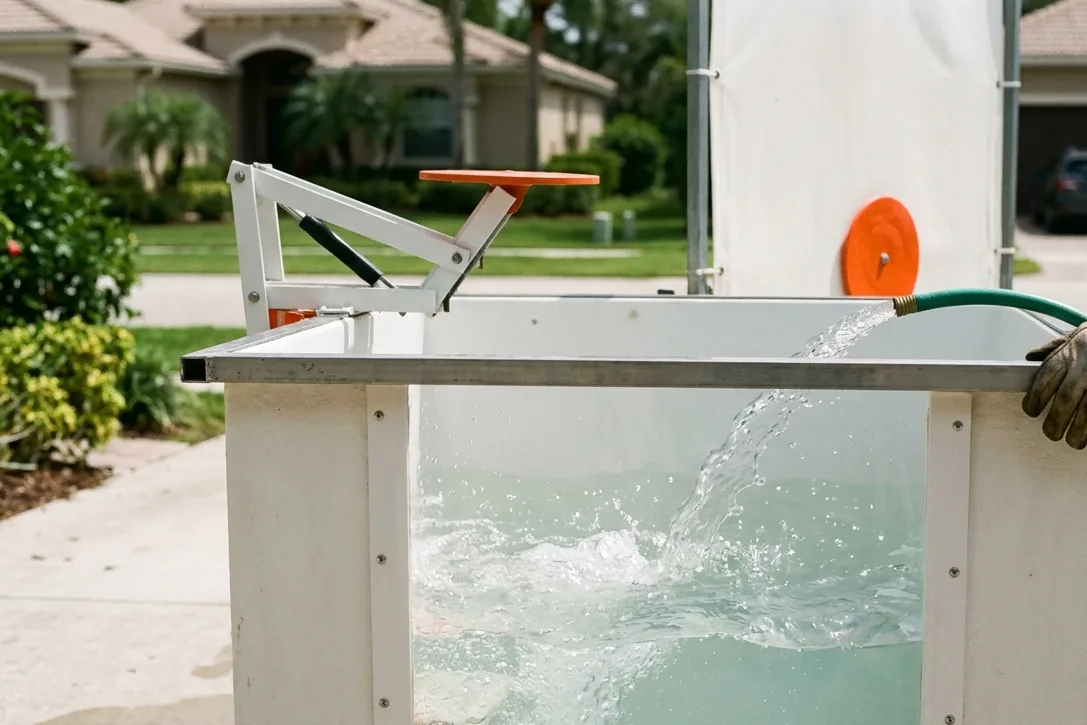
How a dunk-tank operation runs on BounceDay
Signed, deposited, on the calendar — Solo and up
Send a branded contract with the waiver and weather policy written into it — the customer reads both before signing — and, on Solo and up, take the deposit at signature by card or bank transfer, or on your own payment links. The date is checked against your fleet, so a tank is never double-booked.
The setup that has to be right
Run the ordered day-of stops offline — level pad, fill line, clearances, target test — and photo-stamp each one. The finished checklist composes a setup-record PDF at a share link you hand the venue or your insurer. At renewal, the insurance renewal pack (Solo and up) gathers your tank register, a year of bookings, and a link to every one of those records into one document.
Weather is half the business
A flag, on Pro and up, shows the raw NWS forecast, when it was pulled, and your own threshold — then a one-tap reschedule offer you send when you decide. We never auto-cancel and never auto-reschedule; the call, and its timestamp, are yours.
What makes wet units different
A dunk tank isn’t a bounce house with water in it — it’s 500 gallons that have to arrive, fill, drain, and leave a lawn the way you found it. The booking questions that protect a dunk-tank operator are different too, and the software should ask them at booking, not in a panicked morning-of call:
- Water source and fill time. A standard tank needs a customer hose bib and 45–90 minutes to fill. No spigot within reach means you’re trucking water — that’s a line item, and it belongs on the signed booking.
- Drainage plan. Where do 500 gallons go? Downhill from the house, away from foundations and septic fields. One drainage question on the booking form saves a landscaping claim.
- Surface and weight. Filled, a tank can push 5,000 pounds. Driveways and firm turf carry it; a soft lawn after rain doesn’t. Photo-stamp the placement in the setup record.
- Sanitation between events. Same-weekend double bookings need a drain-clean-refill window in the schedule, not an optimistic gap.
- Weather calls. Wind matters less than for inflatables, but cold matters more — a 60-degree day that’s fine for a bounce house is a miserable dunk tank. Flag the forecast on the run sheet.
BounceDay treats all of that as booking data: the questions ride the booking link, the answers ride the day-of checklist, and the setup record photographs the placement before the first pitch is thrown.
Pricing wet units so they earn their water
A dunk tank rents for less than a big combo but costs more per booking in labor, so the price has to carry the whole visit: delivery, the fill window on the customer’s spigot, teardown, and the drain-and-sanitize turnaround before the next yard. Operators who quote a bare daily rate end up donating an hour of hose-watching per event. The cleaner shape is a flat day rate with the fill window built in, a trucked-water line item for sites without a working bib, and a turnaround fee when two bookings share one tank on the same weekend.
Two more habits that save a season:
- Supervision language. A dunk tank concentrates a crowd around a throwing lane. Your rental agreement should name the customer’s supervising adult for the tank, the same way it does for a bounce house.
- Season math. Wet units book inside a narrower weather window than inflatables — price the season, not the year, when you decide whether a second tank pays for itself.
Worth reading before your next one
The deal, plainly
- One flat monthly — no per-unit pricing, no setup or hosting fees.
- Your money lands in accounts you own.
- Your data walks free — export everything, always.
- We record completion; we never certify safety.
- Weather flags on Pro and up: the raw NWS forecast, when we pulled it, and your own threshold — you decide. We never auto-cancel.
Free is real — no card, no countdown. See pricing for exactly what’s on each plan.
Book your next tank in a couple of taps
One tank, a signed quote with a deposit line on Solo and up, and a setup record that writes itself on the day: the whole run, waiting for you the day we open for the season. Free to start — no card.
Start free